
Wind drives ocean waves, shapes swell patterns, and ultimately determines whether conditions are ideal or impossible for sailing and windsurfing. For anyone impacted by wind, accuracy matters. So, just how accurate are wind forecasts?
Wind speed and direction can drastically affect conditions for windsurfers, sailors, kitesurfers, foilers, and other water sport enthusiasts, creating potentially dangerous conditions for anyone out on the water. In this guide, we’ll break down how wind forecasts are generated, what affects their reliability on the water, and which conditions matter most for sailors and windsurfers.
- How Are Wind Forecasts Created?
- How Accurate Are Wind Forecasts?
- Important Weather Readings For Sailing And Windsurfing
- Weather Instruments For More Accurate Wind Forecasts
Before setting sail, use the Tempest Weather System to get hyperlocal weather data for your exact location, including wind. Already on the water? The WEATHERmeter measures wind, temperature, humidity, and pressure readings in the palm of your hand.
How Are Wind Forecasts Created?
Creating accurate wind forecasts relies on multiple weather models, datasets, and meteorological inputs, all of which are influenced by variables such as pressure, temperature, and atmospheric conditions.
Meteorologists, surfers, and weather enthusiasts alike research the following factors to create the most accurate wind forecast:
Forecast Timing and Detail
Before creating an accurate wind forecast, it’s important to have a precise weather forecast. Weather forecasts look at more than just wind speed or direction. They offer insight into factors that can influence wind as well, such as temperature, pressure, and precipitation.
Additionally, surfers and sailors need to understand the differences among hourly, daily, and extended forecasts. Hourly forecasts are going to be the most accurate and crucial, as they’ll be more closely aligned with what’s happening on the water in the here and now, whereas extended or even daily forecasts can easily change or update, leading to potentially dangerous results.
Terrain and Coastlines
It’s not just the weather that can affect wind forecasting; local geography can, too.
Mountains, cliffs, coastlines, and hilly terrain all impact the direction, speed, and ferocity of the wind, often causing it to act in ways that general weather forecasts may struggle to capture accurately, especially in a timely manner.
Air Stability
Air stability, or atmospheric stability, is when specific air parcels are either lighter or heavier than the environment around them.
Lighter air parcels mean that vertical motion is generally suppressed, causing them to rise quickly and then sink back down, creating more stable environments. Heavier parcels mean that vertical motion is more stimulated, creating more unstable conditions such as higher wind speeds and more precipitation, which can drastically affect a sailor, kitesurfer, or windsurfer.
Large Weather Systems
Major weather systems are important to understand for anyone, but especially for those looking to get on the water. Weather systems, including high- and low- pressure zones, incoming weather fronts, and storms, drive broader wind patterns.
Understanding these systems helps meteorologists assess forecast reliability by evaluating the accuracy of large- and small-scale weather features. Additionally, these systems help scientists develop numerical models for detailed wind forecasts.
Real-Time Data Inputs
Real-time data sources, such as commercial or personal weather stations, buoys, turbines, satellites, and balloons, provide highly accurate forecasts, especially for hourly or daily readings. These tools refine models and provide more up-to-date wind information for sailors and surfers alike, ensuring safety and peace of mind while out on the water.
Knowing the optimal sailing wind speed is important for keeping everyone safe at sea.
How Accurate Are Wind Forecasts?
While no forecast is ever 100% reliable, especially when there have been recent fluctuating weather systems, scientists work hard to ensure as little margin of error as possible.
This is becoming increasingly possible with the invention and development of new technologies, such as AI, additional performance prediction models, and network models.
Short-Term Accuracy (Next 24 Hours)
Short-term forecasts are often the most reliable due to the recent data and stable model outputs. These forecasts allow sailors and windsurfers to plan their days as safely as possible, even if it requires close attention to detail.
However, even short-term reports are subject to change due to terrain and pressure, requiring individuals to remain on high alert at all times.
Mid-Range Accuracy (1–3 Days Out)
Mid-range forecasts are where more uncertainty comes into play. Common sources of error can include underestimating local terrain, forecast tool malfunction, and simple user error.
While there are still multiple reports and datasets for scientists to study and compile mid-range reports, individuals should exercise caution when using them before heading out on the water.
Longer-Term Accuracy (4–7 Days Out)
Long-range forecasts are much less reliable due to the atmosphere’s chaotic nature and ever-changing features. While these reports are still useful, they’re better suited to studying general trends than to precise planning.
Wind weather meters can help sailors or surfers plan their excursions in the moment more safely and accurately.
Important Weather Readings For Sailing And Windsurfing
There are several key metrics that sailors and windsurfers need to know before they start their day. These weather readings include:
- Wind Speed: Wind speed is perhaps the most noticeable indication of water conditions. If wind speeds increase, this can quickly create dangerous conditions, such as larger waves and more turbulent tides.
- Wind Gusts: While wind speed is the sustained speed of the wind, a gust is a sudden, brief burst of wind that is often much faster than the general speed. These gusts can create unpredictable conditions for sailors and surfers, potentially turning a seemingly calm day into something more dangerous.
- Wind Direction: The direction of the wind, whether it is on-shore (sea-to-land), off-shore (land-to-sea), or sideshore (parallel between land and sea), affects wave height, direction, and stability. Wind direction can shift quickly due to changing conditions, making it important to continuously monitor forecasts.
- Pressure Changes: Pressure changes often affect multiple weather conditions, such as wind direction and speed, temperature fluctuations, and air stability. These can all quickly change local conditions for an unassuming sailor or surfer if they don’t take care to stay up-to-date on forecasts.
Weather Instruments For More Accurate Wind Forecasts
There are several tools and instruments that individuals can use and combine with scientific reports or forecasts to stay safe out on the water. Some of these include:
- Anemometers: These weather instruments measure wind speed, providing helpful information that can affect wave height and duration.
- Wind Vanes: Often used in conjunction with anemometers, these vanes measure wind direction, providing data that can affect sailors and surfers alike.
- Mobile Weather Apps: Mobile weather apps like WindAlert and SailFlow are becoming increasingly popular, offering real-time information about one’s immediate surroundings.
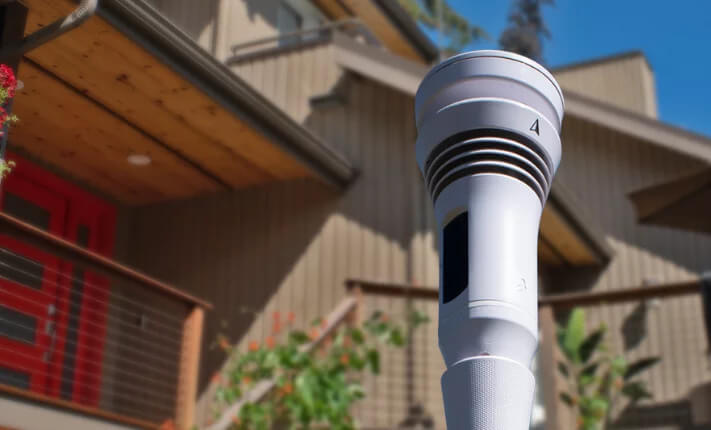
- Personal Weather Stations: Personal weather stations, such as the Tempest Weather Station, deliver hyper-local, AI-powered forecasts that help you plan your sailing or surfing excursion safely.
Get Hyperlocal Wind Readings With The Tempest Weather System Or WEATHERmeter
Wind forecasts have come a long way, but even the best scientific models have their limits. This is especially true when local terrain, pressure systems, and rapidly changing conditions come into play.
For sailors, windsurfers, or anyone looking to enjoy a day at the beach, even the smallest changes in wind speed or direction can significantly impact conditions, which is where Tempest comes in.
The Tempest Weather System combines forecast models with hyperlocal, real-time observations. With our personal weather station or WEATHERmeter, you can track wind speed, gusts, and direction as they happen, giving you and your family the peace of mind you deserve. Buy one today!