
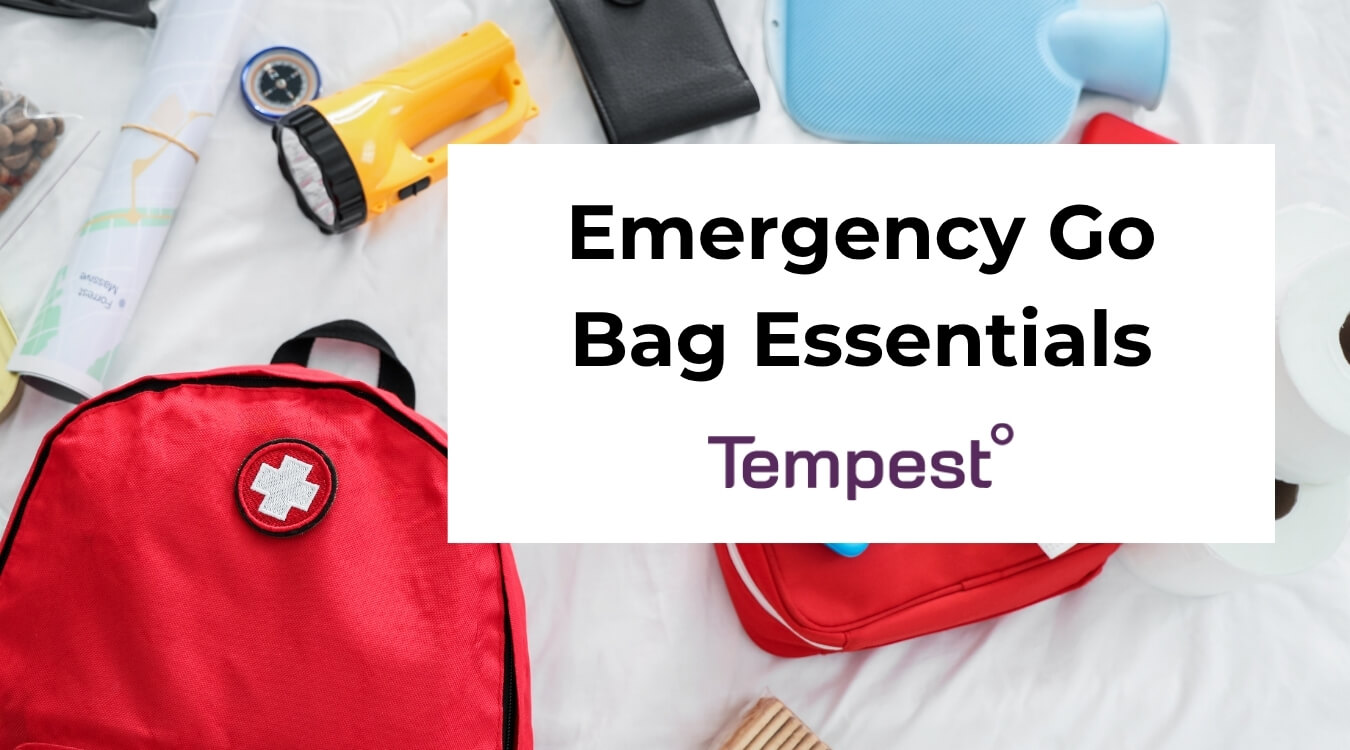
Knowing what to pack for an evacuation can make an emergency situation easier to act in. When an emergency evacuation occurs, you will have little time to act, so having the right items ready helps you leave quickly and safely.
Preparing ahead of time ensures you have what you need to take when evacuating, without second-guessing. This guide covers essential go-bag items and a complete emergency evacuation checklist so you can build a reliable plan for any situation.
Stay prepared with real-time alerts from the Tempest Weather System to know when it’s time to act.
Emergency Go Bag Essentials: What To Pack In An Emergency Evacuation Bag
An emergency go bag is a pre-packed kit designed for fast departure. It should be lightweight, easy to carry, and ready at all times. Knowing what to pack in an emergency evacuation bag helps reduce panic and ensures you have the basics covered.
Your emergency bag should support you for at least a few days. Focus on items that meet immediate needs like hydration, nutrition, safety, and communication. A well-prepared survival kit checklist improves your ability to respond during any emergency evacuation.
- At least three days of non-perishable food
- At least three gallons of water per person
- First aid kits with supplies and necessary medications
- Important documents in a waterproof container
- Map with at least two evacuation routes
- Flashlight, batteries, a battery-powered radio, and a phone charger
- Extra clothing and supplies for infants or pets
- Cash and basic hygiene items
If you are planning what to pack for a fire evacuation, prioritize items you can grab quickly and carry easily. Keep your emergency bag in an accessible location so you can leave without delay.
Emergency Evacuation Checklist
A clear emergency evacuation checklist ensures nothing important is left behind. While your go bag covers essentials, your evacuation list should include last-minute items and situation-specific needs.
Think about your household, location, and risks when building your emergency evacuation list. This helps you prepare for different types of disasters, from wildfires to floods. A flexible evacuation list supports faster decisions under pressure.
- Review evacuation routes to know how to evacuate quickly and safely.
- Grab your emergency go bag and double-check supplies
- Secure important documents, IDs, and insurance records
- Pack additional water, food, and weather-appropriate clothing
- Prepare emergency supplies for pets, children, or medical needs
- Charge devices and bring backup power sources
- Turn off utilities if instructed, and lock your home
Understanding what to take when evacuating reduces stress and improves safety. Review your emergency evacuation checklist regularly to keep it up to date and effective.

Get Hyperlocal Weather Readings With The Tempest Weather System
Preparing for an emergency evacuation starts long before you pack your bags. Knowing when severe weather is approaching gives you valuable time to act. That is where the Tempest Weather System makes a difference.
This personal weather station delivers hyperlocal, real-time data directly to your phone. Instead of relying on broad regional forecasts, you get precise updates for your exact location. That insight helps you decide what to pack for an evacuation and when to leave.
Accurate weather data supports smarter planning. Whether you are monitoring storm conditions or learning about what inclement weather is, staying informed helps you respond faster. You should also know how to prepare for severe weather or understand types of natural disasters to strengthen your evacuation plan.
Be ready before conditions worsen. Explore the Tempest Weather System to improve your emergency preparedness and make confident decisions when it matters most.